The Expertise Behind Your IDC: Why Training With a Course Director Changes Everything
When you’re comparing IDC options, you’ll encounter a range of instructors delivering them — from IDC Staff Instructors to Master Scuba Diver Trainers to Course Directors. Most people know there’s a hierarchy, but fewer understand what that hierarchy actually means in practice, or why it should influence your decision about where to train.
This article explains the PADI teaching hierarchy, what a Course Director actually is, and why it matters for the quality of IDC you receive.
The PADI Teaching Hierarchy
- 🤿 PADI Open Water Scuba Instructor (OWSI) — Can teach recreational courses from Discover Scuba to Divemaster level
- ⭐ Master Scuba Diver Trainer (MSDT) — OWSI with 5+ Specialty Instructor certifications — broader teaching scope
- 🏅 IDC Staff Instructor — Assists Course Directors in delivering the IDC — does not run IDCs independently
- 🌟 Master Instructor — Recognises instructors with exceptional teaching records, certifications, and professional development — a mark of sustained excellence
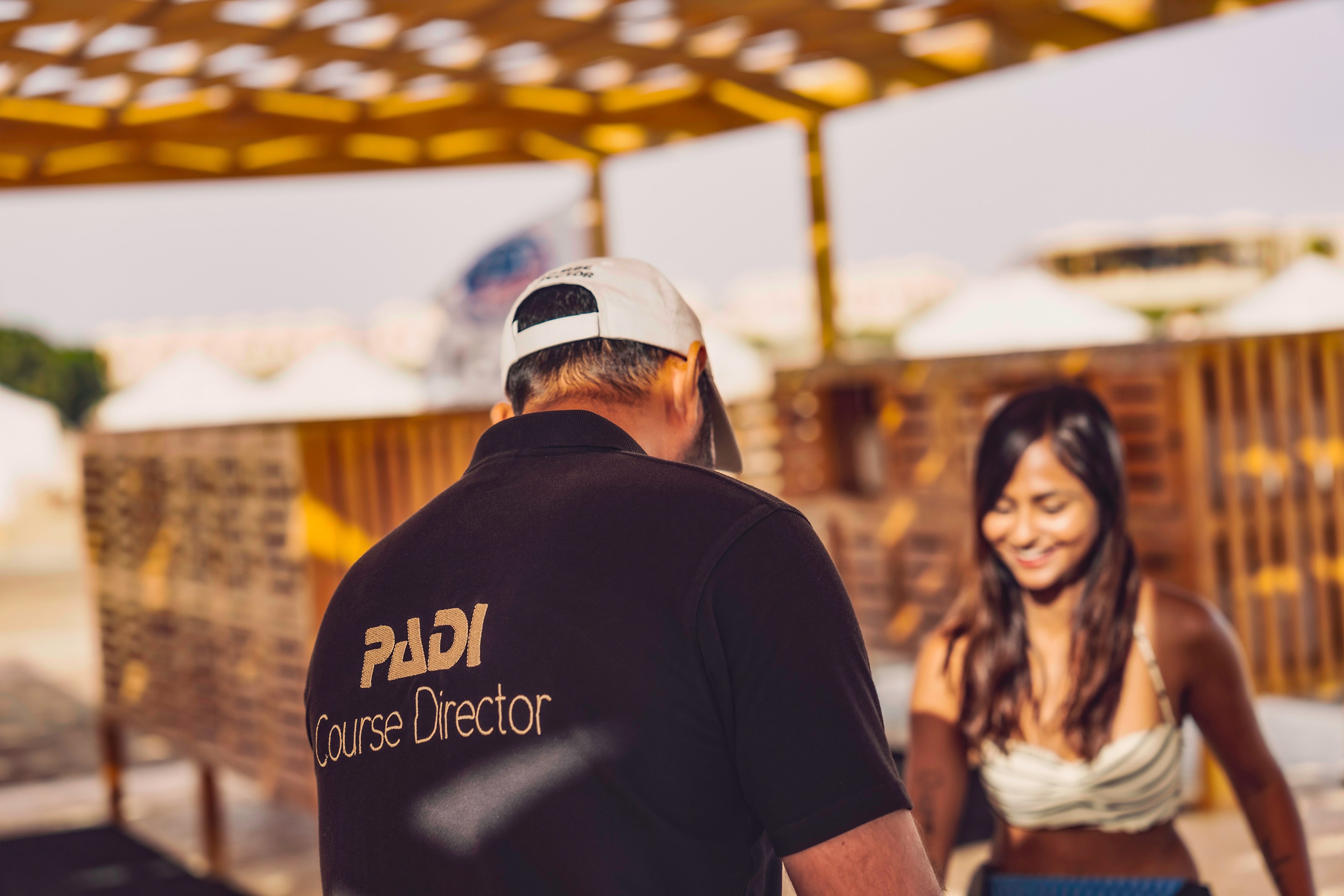
- 🎓 PADI Course Director — The highest teaching rank in recreational diving — independently authorised to deliver the full IDC and certify new PADI Instructors
The Course Director rating is the highest professional teaching credential in recreational scuba diving. Not everyone who teaches an IDC is a Course Director — and that distinction matters more than most candidates realise.
What It Takes to Become a Course Director
The pathway to Course Director is long and demanding. A candidate must first be an experienced OWSI, then progress through MSDT, IDC Staff Instructor, and Master Instructor ratings, accumulate substantial experience assisting with IDCs, and then complete the PADI Course Director Training Course (CDTC). The CDTC is not delivered by a local dive centre — it is conducted directly by PADI, led by their most senior global training leadership. The course Dominik completed in Kota Kinabalu, Malaysia in March 2026 was run by an elite team including Thomas Knedlik (VP Training, Sales & Field Service, PADI Asia Pacific), Alan Jan (Director, Training & Instructor Development, PADI Americas), Erika Hoffman (Director, Training & Instructor Development, PADI EMEA), Conny Jeppson (Manager, Instructor Development, PADI Asia Pacific), Michael Richardson (Manager, Instructor Development, PADI Americas), Eric Albinsson (Supervisor, Training Department, PADI Americas), Justin He (Regional Training Manager, PADI Greater China), and Shinya Kitaoku (Instructor Development & Quality Management Consultant, PADI Asia Pacific Japan). Pass rates are not trivial. The certification is designed to be earned, not granted.
Beyond the formal requirements, effective Course Directors typically bring years — often decades — of real-world instructing experience before they ever teach their first independent IDC. That experience shapes their ability to read candidates, identify subtle skill gaps, give precise feedback, and manage the complex dynamics of an intensive training group.
“The Course Director rating isn’t just a qualification — it’s the output of a career spent developing expertise in teaching people to teach others. That’s a fundamentally different skill set from teaching diving itself.”
— Dominik Weckherlin
Why It Changes Your IDC Experience
In practical terms, training with a qualified Course Director versus an IDC Staff Instructor produces a meaningfully different experience. Here’s why:
Independent authority and accountability
A Course Director runs the IDC on their own authority and takes full professional responsibility for every candidate they certify. This creates a level of investment and accountability that shapes every decision during the course — from the standards held in confined water to the rigour of the final IE preparation.
Depth of feedback
The ability to give precise, actionable feedback on teaching performance is a skill that develops over years of observation and instruction. Course Directors have typically assessed hundreds of candidate presentations and skill demonstrations. They know exactly what needs improvement and how to articulate it in a way that candidates can actually apply.
Examination insight
Course Directors work closely with the PADI system — attending trainer events, engaging with updated standards, and maintaining active relationships with the Examiner community. That current, insider knowledge of what the IE actually assesses is invaluable in preparation.
What This Means When You’re Choosing an IDC
When you’re evaluating IDC options, it’s worth asking directly: who is delivering this course, and what is their certification level? Not all IDCs are equal, and the person standing at the front of the room is the single most important variable in the quality of your experience and preparation.
Training with an experienced Course Director who has invested decades in developing their craft is the highest-quality option available in recreational diver education. It’s the option you deserve for a decision this significant.