Quality Training: What Comprehensive Instruction Really Means
In over thirty years of diving, I’ve been taught by excellent instructors and mediocre ones. I’ve watched students trained to high standards progress confidently into challenging environments, and I’ve watched others struggle because critical foundations were skipped or rushed. The difference between the two experiences comes down almost entirely to the quality of instruction — and quality is not an accident.
This article is about what truly high-quality dive instruction looks like at every level of the diver education pathway. Understanding this matters whether you’re a student choosing a course, or a Divemaster considering whether to invest in an IDC.
The Minimum vs. The Standard
PADI’s training standards are excellent. They represent decades of research, incident data analysis, and global teaching experience. But standards define a minimum, not a ceiling. An instructor who consistently delivers exactly the minimum required is technically compliant — and will produce technically certified divers who may nonetheless lack the depth of understanding to handle real-world conditions with genuine confidence.
The difference between a minimum-compliant course and a truly well-delivered course often comes down to three things: time spent, feedback quality, and the instructor’s personal investment in each student’s understanding.
“Anyone can sign a certification card. The job of a quality instructor is to ensure the person holding it genuinely deserves it — not just on paper, but in the water.”
— Dominik Weckherlin
What Quality Looks Like at the Beginner Level
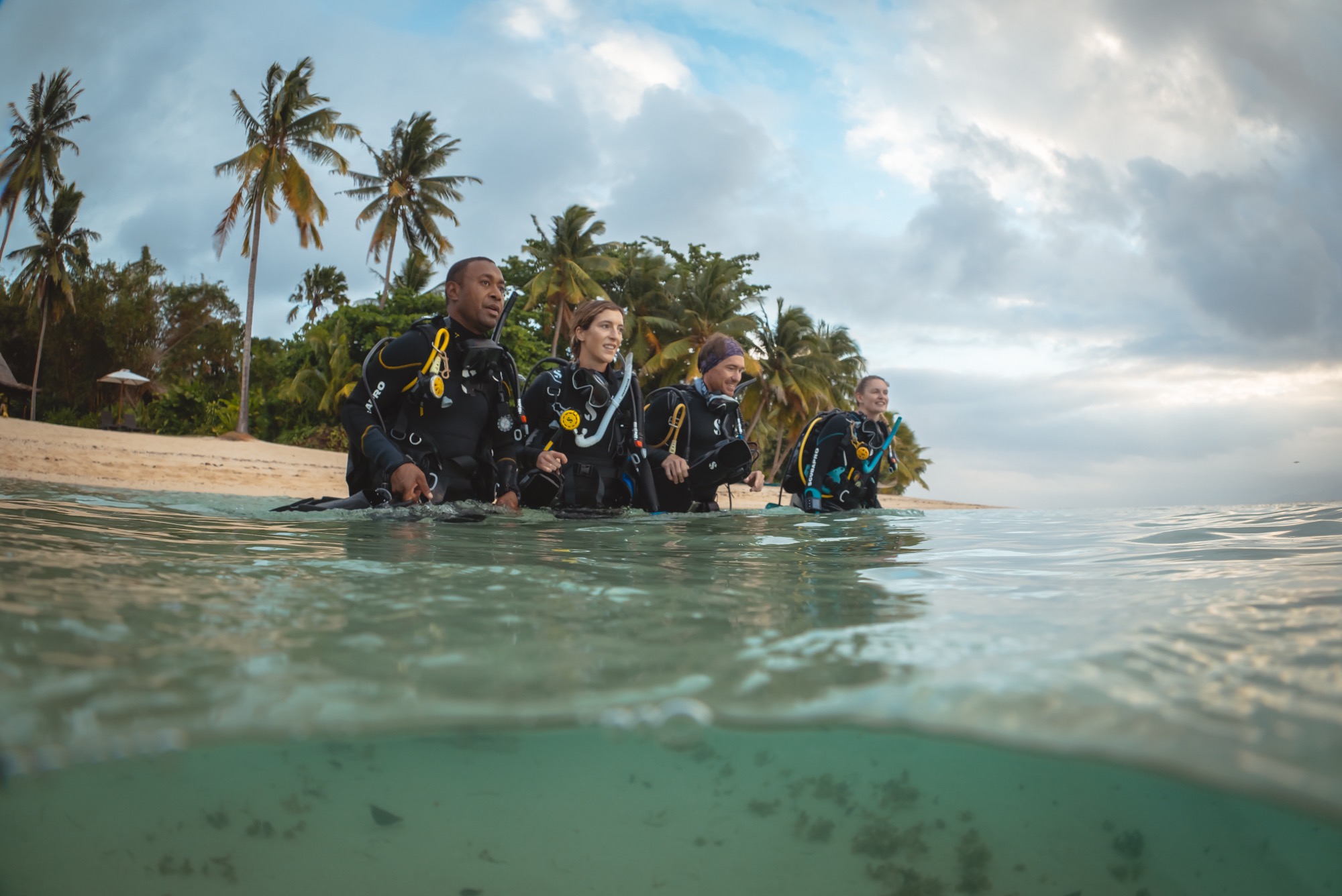
A quality Open Water course doesn’t rush through confined water skills to get to the open water dives faster. It ensures that each student is genuinely comfortable before progressing — not just technically capable of performing a skill once under close supervision, but relaxed enough to have headspace for their environment. That distinction matters enormously for long-term enjoyment of diving and for safety.
Quality at this level also means honest assessment. A responsible instructor tells a student when they need more time — even when that’s an uncomfortable conversation. Certifying a diver who isn’t ready doesn’t help them. It creates a liability for every dive professional they’ll encounter later.
What Quality Looks Like at the Advanced and Specialty Level
Advanced and specialty courses are where many instructors begin to cut corners, treating them as box-ticking exercises rather than genuine skill development opportunities. A well-delivered Advanced Open Water course, for example, should leave a student meaningfully better in three to five specific areas — not just logged for the required number of dives in each discipline.
Quality specialty instruction requires the instructor to actually know their subject deeply. A navigation specialty taught by someone who can barely use a compass themselves produces navigators who can barely use a compass. The best specialty instructors bring genuine enthusiasm and expertise to their subject area — it’s visible, and it transfers.
What Quality Looks Like at the Divemaster and IDC Level
This is where the stakes increase significantly, because you’re now training people who will themselves teach others. A mediocre IDC produces mediocre instructors who produce mediocre students — the effect compounds across every person they certify over a career. A rigorous, well-delivered IDC does the opposite.
At the professional level, quality means holding candidates to a high standard rather than a convenient one. It means giving honest, specific feedback rather than generic encouragement. It means developing in each candidate not just the technical skills required to pass the Instructor Examination, but the judgement, communication skills, and personal standards that will define their career.
The Role of the Instructor’s Own Standards
Ultimately, the quality of any course is bounded by the standards of the person delivering it. An instructor who dives with sloppy buoyancy will model and tolerate sloppy buoyancy. An instructor who briefs carelessly will produce students who plan carelessly. An instructor who is genuinely curious about the ocean, rigorous about safety, and invested in their students’ development will produce divers who reflect all of those qualities.
This is why, when I’m asked what makes a good IDC, my answer is always the same: start with the Course Director. Their standards, their attention, their investment in each candidate — that is what you are actually buying when you choose a programme.
If you’d like to understand how quality is built into every aspect of the IDC I run in Zürich and Dauin, download the Info Pack or reach out directly. I’m happy to talk about exactly what you can expect.